Drain Cleaning in Beaverton, OR: How to Clear Clogged Drains
Drain Cleaning Beaverton OR: How to Clear a Clogged Drain Step by Step
Drain cleaning in Beaverton OR is something most homeowners will need to tackle at least a few times a year. A slow or completely blocked drain is usually caused by a buildup of hair, soap scum, grease, or food debris, and in many cases you can clear it yourself with basic tools before calling a plumber. This guide walks you through each step, from diagnosing the clog to flushing the line clean, and tells you exactly when the problem is beyond a DIY fix.
Before You Start: What You Will Need
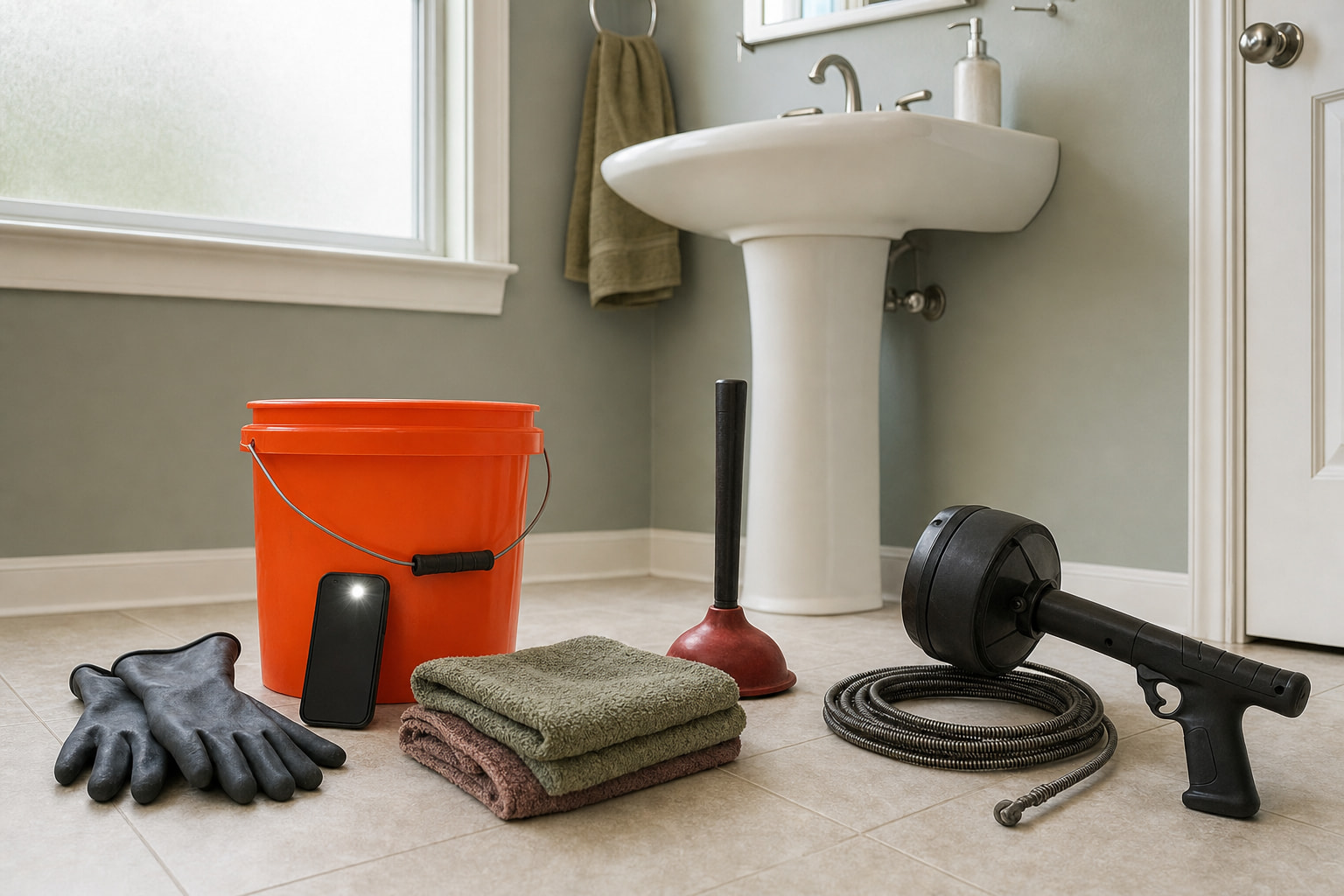
Gather these items before you touch the drain. Having everything on hand saves time and keeps you from making a mid-job hardware run.
Rubber gloves (heavy-duty, not latex)
A bucket or old towels
A flashlight or phone torch
A drain snake or hand auger (a 25-foot cable auger handles most household clogs)
A cup plunger for sinks and a flange plunger for toilets
Baking soda and white vinegar (for mild clogs)
Needle-nose pliers or a drain hair removal tool
Adjustable pliers or a pipe wrench if you plan to open the P-trap
One thing to skip: store-bought chemical drain cleaners. The National Safety Council warns that caustic drain cleaners can damage older pipes and cause serious chemical burns if they splash back. They also rarely dissolve the full clog, so the blockage usually returns within weeks.
Step 1: Identify Where the Clog Is
Start by figuring out whether one drain is slow or multiple drains in the house are backing up at the same time. A single slow sink almost always means a localized clog in that fixture's drain line or P-trap. If two or more fixtures are draining slowly, or if water backs up into the tub when you flush the toilet, the blockage is likely deeper in the main sewer line, which requires professional equipment.
Check these spots in order:
The drain opening itself — hair and soap often mat right at the stopper.
The P-trap — the curved pipe under the sink that holds standing water. This is the most common spot for grease and debris to collect.
The branch drain line — the horizontal pipe that runs from the fixture to the wall stack.
Beaverton homes built before the 1980s in neighborhoods like Raleigh Hills and the older sections of Cedar Hills sometimes have cast-iron or galvanized steel drain lines. These corrode from the inside over time, narrowing the pipe diameter and making clogs far more frequent. If your home is older, it's worth knowing what the signs of an outdated plumbing system look like before you assume a simple clog is the only issue.
Step 2: Remove Visible Debris at the Drain Opening
Pull out the drain stopper or cover and set it aside. Use needle-nose pliers or a plastic hair removal tool to pull out any hair, soap buildup, or debris sitting right at the opening. This step alone clears a surprising number of slow bathroom sink and shower drains.
Rinse the stopper under hot water and scrub off any soap scum before you reinstall it. A gunked-up stopper restricts flow even after the drain itself is clear.
Step 3: Try the Baking Soda and Vinegar Method
For mild clogs with no standing water, this is a safe first attempt. Pour one cup of baking soda directly into the drain, followed immediately by one cup of white vinegar. Cover the drain opening with a rag or stopper to force the fizzing action downward rather than up and out. Wait 15 to 20 minutes, then flush with the hottest tap water you can run for two full minutes.
This method works best on grease and soap buildup. It will not break up a solid hair clog or a foreign object lodged in the pipe.
Step 4: Use a Plunger
If the baking soda method doesn't move the clog, reach for the plunger. The technique matters more than the force you apply.
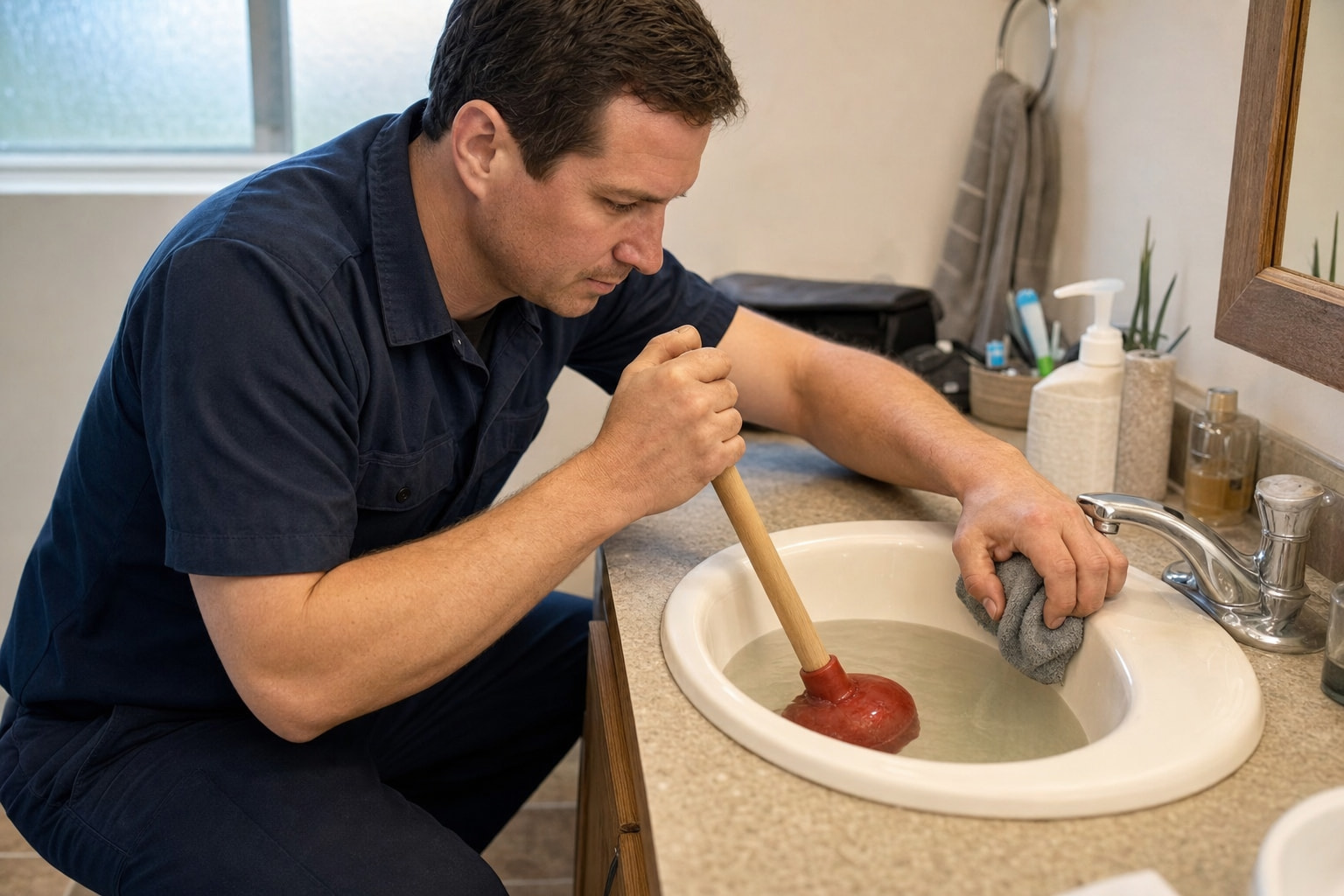
For a sink, stuff a wet rag into the overflow hole (the small opening near the top of the basin). This seals the air path so your plunging pressure goes into the drain instead of escaping.
Add enough water to the basin to cover the plunger cup by about an inch.
Place the cup plunger directly over the drain and press down firmly to create a seal.
Plunge with 10 to 15 firm, steady strokes, then pull up sharply on the last stroke to break the suction.
Check whether water drains freely. Repeat two or three times if needed.
For a toilet, use a flange plunger (it has an extra rubber flap that fits the toilet drain opening). The same principle applies: seal, steady strokes, sharp pull.
Most household drain clogs sit within the first 10 feet of pipe. A good plunger and a hand auger will clear the majority of them without any chemicals at all.
Step 5: Open and Clean the P-Trap
If plunging doesn't work, the clog is probably in the P-trap. Place a bucket under the curved pipe beneath the sink. Use adjustable pliers to loosen the slip-joint nuts on both ends of the P-trap (hand-tight is usually enough; don't overtighten when you reinstall). Slide the trap off and dump the contents into the bucket.
Use an old bottle brush or a straightened wire hanger to scrub the inside of the trap. Rinse it thoroughly, then reinstall it. Run water slowly at first to confirm there are no leaks at the slip joints before you run a full stream.
Step 6: Run a Drain Snake (Hand Auger)
If the P-trap was clear or the clog is still present after cleaning it, the blockage is further down the branch drain line. A hand auger (drain snake) is the right tool here.
Feed the cable into the drain opening or directly into the pipe after removing the P-trap.
Turn the handle clockwise as you push the cable forward. The rotating tip breaks up or hooks the clog.
When you feel resistance, keep rotating and push gently. Don't force it, especially in older pipes.
Once you feel the cable break through, pull it back slowly while still rotating. This pulls debris out rather than pushing it deeper.
Run hot water for two full minutes to flush any remaining debris toward the main stack.
A standard 25-foot hand auger reaches most branch drain lines. For kitchen sink clogs caused by grease buildup, you may need to repeat this process and follow up with a hot-water flush. The U.S. Department of Energy notes that most residential water heaters deliver water at 120°F, which is hot enough to soften grease in drain lines without scalding risk at the tap.
Step 7: Flush and Test the Drain
Once the clog is cleared, run hot water at full pressure for at least two minutes. Watch the drain carefully. Water should disappear immediately with no gurgling sounds. Gurgling after clearing usually means air is trapped somewhere in the line, which can point to a partial blockage still downstream or a venting issue in the drain stack.
If the drain flows freely, you're done. If it's still slow or gurgles, the clog is deeper than a hand auger can reach, and it's time to call a plumber.
When to Call a Professional for Drain Cleaning in Beaverton OR
DIY drain cleaning has real limits. Stop and call a plumber if you notice any of these situations:
Multiple drains are slow or backing up at the same time. This almost always means a main sewer line blockage, which requires a motorized drain auger or hydro-jetting equipment.
You smell sewage gas near any drain. This can indicate a broken sewer line or a dry P-trap that's letting sewer gas into the home, both of which need professional diagnosis.
Water backs up into a different fixture when you run the washing machine or flush a toilet.
The clog returns within a few days of clearing it. Recurring clogs often mean a partial pipe collapse, root intrusion, or significant scale buildup that only a camera inspection can confirm.
You see water stains or soft drywall near drain pipes. A slow leak from a damaged pipe can look exactly like a simple clog at first.
Beaverton's mature tree canopy (especially in neighborhoods like Sexton Mountain and Murrayhill) means root intrusion into older clay or cast-iron sewer laterals is a real and common problem. Tree roots follow moisture and can crack or completely block a sewer line within a few years of first entry. A professional plumber can run a sewer camera to confirm root intrusion before recommending repair options.
For a broader look at what goes wrong with aging plumbing, the 12 common plumbing mistakes Beaverton and Portland homeowners make is worth reading before your next DIY project.
If you need a plumber who covers the Beaverton area and surrounding communities, AllScope Plumbing and Construction, Inc. handles residential plumbing services in Beaverton, OR, including drain cleaning, sewer line repair, and full pipe inspections. They also serve nearby areas including Cedar Hills, West Slope, and Rockcreek. When you call, ask any plumber you hire whether they carry liability insurance and hold an Oregon CCB license, so you're protected if anything goes wrong on the job.
To schedule drain cleaning or a sewer inspection, call AllScope Plumbing and Construction, Inc. at (503) 796-1113 or request a quote through their website.
FAQs
How much does drain cleaning in Beaverton OR typically cost?
Professional drain cleaning in the Beaverton area generally runs between $100 and $350 for a standard snake or auger service on a single fixture. Main sewer line cleaning with hydro-jetting can range from $300 to $600 or more, depending on line length and severity. These are general market ranges, not quotes from any specific contractor.
How often should I have my drains professionally cleaned?
Most plumbers recommend a professional drain cleaning every 1 to 2 years for average households. Homes with older pipes, large families, or mature trees near the sewer lateral may benefit from annual service. Kitchen drains that handle a lot of cooking grease often need attention more frequently than bathroom drains.
Can I use chemical drain cleaners instead of snaking?
Chemical drain cleaners are not a reliable substitute for mechanical cleaning. They can soften some organic clogs temporarily, but they don't remove the debris from the pipe. They also generate heat that can warp PVC fittings and corrode older metal pipes with repeated use. A plunger or snake is safer and more effective for most clogs.
Why does my drain keep clogging in the same spot?
A drain that clogs repeatedly in the same location usually has a structural problem: a partial pipe collapse, a belly (a low sag in the pipe that collects debris), root intrusion, or heavy scale buildup on the pipe walls. A sewer camera inspection is the fastest way to confirm what's happening so you can fix the root cause rather than just clearing the symptom.
Is a slow drain always a clog?
Not always. A slow drain can also result from a blocked vent stack (which affects drainage pressure throughout the house), a partially closed clean-out cap, or a failing P-trap that's losing its water seal. If snaking the drain doesn't improve flow, a plumber can diagnose whether the issue is a clog, a venting problem, or something else.
What causes kitchen drains to clog more than bathroom drains?
Kitchen drains collect cooking grease, food particles, and soap. Grease is liquid when hot but solidifies on the pipe walls as it cools, gradually narrowing the drain opening. Bathroom drains, by contrast, mostly collect hair and soap scum. Both types of buildup respond well to mechanical cleaning, but grease clogs often require hotter water and more passes with the snake to fully clear.
Do Beaverton homes need drain cleaning more often than homes in other cities?
Beaverton's water supply comes from the Tualatin Valley Water District, which draws from the Tualatin River and Bull Run. The water has moderate mineral content, and mineral scale can gradually coat the inside of drain pipes over time, especially in homes with older galvanized steel lines. Combined with the area's heavy tree canopy and older housing stock, Beaverton homeowners may find they need drain service slightly more often than homeowners in newer subdivisions with PVC plumbing throughout.
